

Calgary winters have a way of making dry air impossible to ignore. Static shocks follow you around the house, your lips crack overnight, and the hardwood floor that looked perfectly tight in July suddenly has visible gaps between the boards.
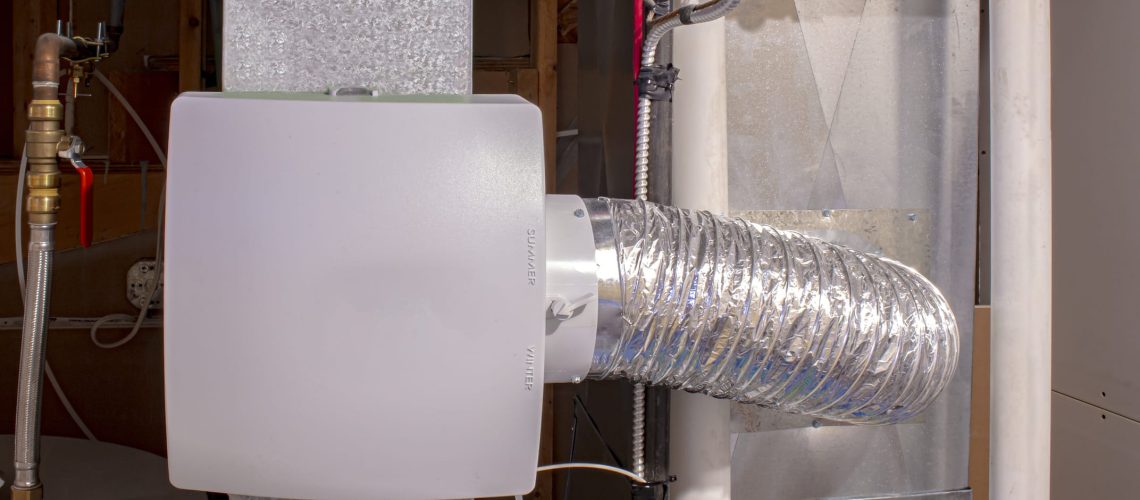
For many homes with forced-air heating, a furnace humidifier can make a noticeable difference. Instead of carrying a portable unit from room to room and refilling it every day, a whole-home system connects to the furnace and adds moisture to the air as it moves through the ductwork.
The important part is getting the right system and the right humidity level. Too little moisture leaves the house uncomfortable. Too much can lead to condensation on windows and other moisture problems.
Why Calgary Homes Get So Dry in Winter
Cold air contains less moisture than warm air. When that cold outdoor air enters a home and is heated, its relative humidity drops significantly.
That is one reason Calgary homes can feel extremely dry once the furnace starts running regularly. Calgary sits at an elevation of more than 1,000 metres, and its continental climate brings large temperature swings throughout the year. Environment and Climate Change Canada records an average January temperature of -7.6°C at Calgary International Airport, with an average daily minimum of -13.5°C.
Once that outdoor air is brought inside and heated, indoor humidity can fall well below the level most people find comfortable.
Health Canada recommends keeping indoor relative humidity between 30 and 50%, while Natural Resources Canada notes that humidity should generally be lower during winter to reduce condensation on windows and other cold surfaces.
That is where a furnace-mounted humidifier can help. Rather than adding moisture to one room, it works with the home’s existing heating system to distribute it throughout the house.
Signs Your Home May Need a Furnace Humidifier
You do not necessarily need a humidifier just because winter has arrived. Your home will usually give you a few clues first.
- Static shocks are happening constantly. If touching a doorknob or walking across the carpet regularly ends with a spark, indoor humidity may be very low.
- Your throat or nose feels dry in the morning. Dry indoor air can contribute to irritation in the nose, mouth and throat.
- Nosebleeds become more common during cold snaps. Very dry air can irritate nasal passages, particularly in children.
- Wood is changing noticeably. Gaps between hardwood boards, shrinking furniture joints and cracks in wooden trim can all appear as moisture levels change.
- Your wooden instruments are reacting to winter. Guitars, pianos and other wooden instruments can be sensitive to significant changes in humidity.
- You are constantly refilling portable humidifiers. Running two or three units around the house can become a daily chore.
- Your hygrometer regularly reads below 25%. A humidity meter gives you a much better starting point than guessing based on how the air feels.
How a Furnace Humidifier Works With Your Heating System
A whole home humidifier is built into the existing HVAC system. It does not replace the furnace, and in most cases it can be added to an existing forced-air heating system.
Where the Unit Actually Sits
The humidifier is mounted on or beside the furnace ductwork. Depending on the model, it may connect to the supply or return side of the system.
It also needs a water supply and a drain. That means installation involves more than simply attaching a box to the ductwork. The HVAC side needs to be connected properly, while the water and drain connections need to be installed correctly as well.
For homeowners, that can make having one company handle both sides of the installation much simpler. TipTop’s residential plumbing team can take care of the plumbing connections as part of the installation.
How It Knows When to Run
A humidistat measures the humidity inside the home. When the humidity drops below the selected setting, the humidifier is activated.
Depending on the furnace humidifier types, water may run over an evaporator pad or be converted into steam. The furnace blower then distributes the moisture through the home’s ductwork.
There is no tank to carry upstairs and no daily bucket to refill.
Can You Add a Humidifier to an Existing Furnace?
In most cases, yes. A furnace replacement is not required simply because you want to add a humidifier.
There is one important limitation: traditional furnace-mounted evaporative systems are designed for forced-air heating. Homes heated by boilers or in-floor systems do not have the same ductwork to distribute moisture. A different approach, such as a steam humidifier, may be required.
Furnace Humidifier Types: Bypass, Fan-Powered and Steam
The three main furnace humidifier types work differently, and the right choice depends on the size and layout of your home, your existing furnace and how much humidity you need to add.
| Type | How it works | Best suited to | Water use | Main drawback |
| Bypass | Uses furnace airflow to move air across a water panel | Most average-sized homes | Moderate | Depends on furnace blower |
| Fan-powered | Uses its own fan to move air across a water panel | Larger homes or homes needing more output | Moderate | Higher equipment cost and electricity use |
| Steam | Heats water and introduces steam into the ductwork | Large homes or precise humidity control | Higher | Highest installation cost |
Bypass Humidifiers
Bypass models are among the most common whole-home options. They use the furnace’s existing airflow to move air through a water panel, where moisture is picked up and carried into the ductwork.
They tend to be simpler and less expensive than powered or steam systems. The evaporator pad also needs to be replaced periodically.
Fan-Powered Humidifiers
Fan-powered models have their own blower. That gives them greater airflow through the humidifier and can provide more moisture output than a basic bypass system.
They cost more to install and use a small amount of electricity, but they can be a practical choice for larger homes or systems where a bypass model is not enough.
Steam Humidifiers
Steam systems heat water to create steam, which is then introduced into the air moving through the ductwork.
They offer more precise humidity control and can produce a high level of moisture, but they are also the most expensive option and may require additional electrical work.
There is no single humidifier that belongs in every Calgary home. A technician should consider the home’s size, ductwork, furnace capacity and existing humidity before recommending a system.
The Right Humidity Level for a Calgary Winter
This is where many humidifier installations go wrong.
The goal is not to set the humidistat as high as possible and leave it there all winter. As outdoor temperatures fall, the amount of moisture your home can safely hold also changes.
What Is the Ideal Humidity for a House in Winter in Canada?
For a Calgary home, around 30 to 40% can be comfortable during moderate winter conditions. During a deep cold snap, however, the setting may need to come down to prevent condensation.
A useful starting guide is:
| Outdoor temperature | Suggested indoor humidity |
| +10°C and above | 40 to 45% |
| 0 to -10°C | 35 to 40% |
| -10 to -20°C | 30 to 35% |
| -20 to -30°C | 25 to 30% |
| Below -30°C | 20 to 25% |
These are guidelines rather than fixed rules. Older windows, single-pane glass and less efficient window frames may require lower indoor humidity.
Why You Have to Turn It Down When It Gets Cold
The colder the outdoor temperature, the colder the inside surface of your windows can become. If the indoor air contains too much moisture, that moisture can condense on the glass or window frames.
That is why the house humidity in winter may need to change throughout the season.
Modern humidistats can make this easier. Some systems use an outdoor temperature sensor to adjust the target automatically instead of leaving homeowners to make changes every time Calgary gets a cold snap.
What Happens If You Set It Too High?
The first sign is often condensation on the windows. In colder weather, that can become frost or ice around the frames.
Persistent moisture can eventually contribute to mould growth or damage around affected areas. Health Canada recommends controlling indoor humidity and specifically identifies condensation on windows as a sign that moisture levels may need attention.
The answer is not necessarily to remove the humidifier. Often, the setting simply needs to come down.
Keeping a Humidifier Healthy in a Hard-Water City
Calgary’s mineral-heavy water can leave scale on the components of a humidifier. That buildup can reduce water flow, affect the evaporator pad and eventually interfere with performance.
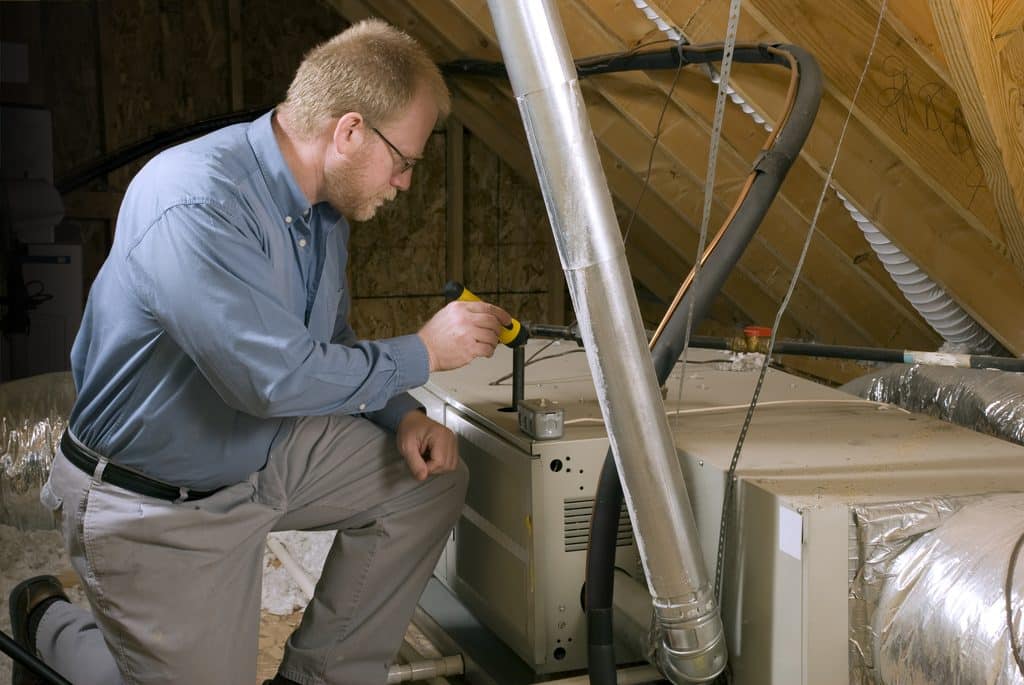
This is one more reason to include the humidifier in your annual furnace humidifier maintenance rather than treating it as an appliance you can install and forget.
A typical service can include:
- Replacing the evaporator pad
- Cleaning mineral buildup from the unit
- Checking the water supply and solenoid valve
- Inspecting the drain line
- Confirming the system is draining properly
- Checking the bypass damper where applicable
- Confirming the humidistat is reading and controlling humidity correctly
Calgary’s water hardness is discussed in more detail in our article on Calgary’s hard water and its impact on plumbing.
The bypass damper also deserves attention. Depending on the system, it may need to be moved to its summer position once humidification is no longer required.
Annual servicing is easiest to remember when it is done alongside your annual furnace tune-up, before the heating season gets busy.
Why Early Fall Is a Good Time to Install One
September and October are a practical time to think about a furnace humidifier Calgary homeowners can rely on through the winter.
The equipment can be installed before the heating season is fully underway, and the system can be checked and adjusted before the first prolonged cold spell. Installation usually does not involve tearing apart the home. The humidifier is fitted near the existing furnace and connected to the necessary ductwork, water and drain lines.
It also makes sense to combine the installation with a seasonal furnace visit. While the technician is already working on the system, they can identify other issues that may need attention before colder weather arrives. TipTop Plumbing & Heating serves homeowners across Calgary, Airdrie and Okotoks, with HVAC and plumbing services under one roof.
Is a Furnace Humidifier Right for Your Calgary Home?
A Calgary winter is going to bring cold, dry air into your home. You cannot change the weather, but you can control how much moisture stays in the air once the furnace starts running.
For many homeowners, a whole-home humidifier is a practical way to deal with persistent static, dry skin, irritated airways and changes in wood around the house. The key is choosing a system that suits the home and setting it correctly as outdoor temperatures change.
If you are considering a furnace humidifier Calgary homeowners can use through the winter, TipTop Plumbing & Heating can assess your existing heating system, determine which type is appropriate and handle the required HVAC and plumbing connections.
Book a fall visit with TipTop Plumbing & Heating to discuss a humidifier for your home, or submit a service request online. Our team serves Calgary, Airdrie and Okotoks and is available 24/7 when heating problems cannot wait.