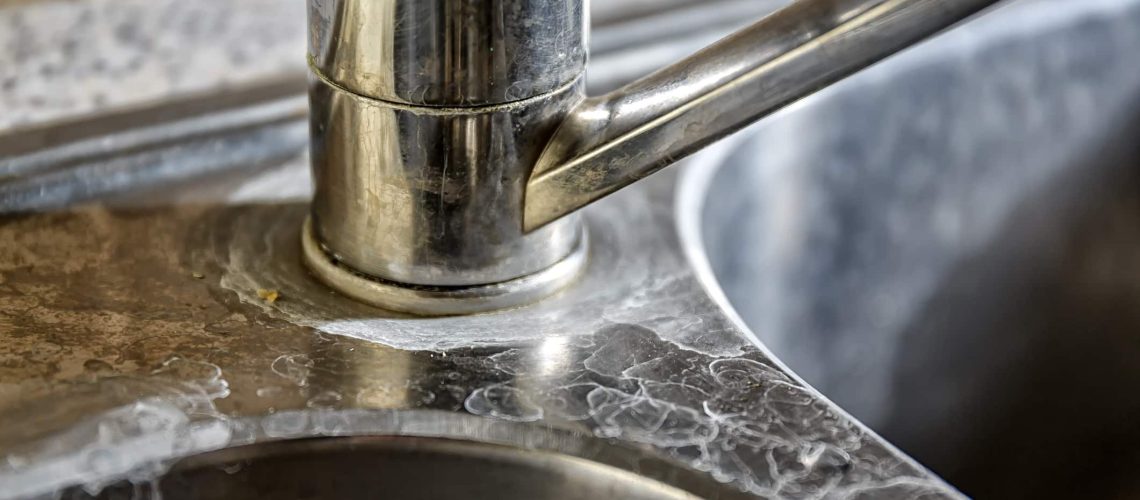

That white residue around the faucet may look like a cleaning nuisance, but it is a sign of what hard water can leave behind. Over time, calcium and magnesium can build up inside faucets, showerheads, water heaters and appliances.
Calgary’s water is naturally hard, but that does not mean every home needs a softener. The question is whether hard water is causing enough problems to justify the investment.
What Does a Water Softener Actually Do?
A traditional water softener uses ion exchange to remove calcium and magnesium from your home’s water. As water passes through the system, hardness minerals are captured before the water continues through your plumbing.
Reducing those minerals can help limit scale on faucets, showerheads, water heaters and appliances. A softener is designed specifically for hard water, though, so it will not address issues such as chlorine, sediment, taste or odour.
How Do You Know If Your Home Has Hard Water?
These are some of the most common signs:
- White or chalky deposits around faucets
- Scale buildup inside showerheads
- Cloudy spots on glassware
- Soap scum that is difficult to remove
- Dry or tight-feeling skin after showering
- Hair that feels dull or coated
- Reduced water flow from fixtures
- Frequent cleaning of mineral deposits
- Scale accumulating inside appliances
- Water heater performance problems
One sign alone does not necessarily mean you need a softener. Several signs appearing together are a different story.
Why Calgary Homes Are Prone to Mineral Scale
Calgary’s water contains naturally occurring calcium and magnesium, which are responsible for its hard water. The exact hardness varies depending on the water source and time of year, but local water generally falls within the hard to very hard range.
The concern for homeowners is what those minerals leave behind. Over time, scale can collect inside faucets, showerheads, water heaters and appliances, creating maintenance problems that become more noticeable as the buildup accumulates.
So, Do You Actually Need a Water Softener?
A softener is worth considering if you are regularly dealing with several of the following issues.
1. White Scale Keeps Coming Back
If white deposits continue appearing around your faucets, showerheads and sinks shortly after cleaning, hard water is likely responsible. A water softener reduces the hardness minerals entering your plumbing, helping address the source rather than simply removing the buildup once it appears.
2. Your Water Heater Is Building Up Scale
Hard water can contribute to mineral buildup inside traditional tank water heaters and tankless heat exchangers. Over time, that buildup can interfere with heat transfer, restrict flow and make the system work harder.
A water softener will not replace regular water heater maintenance, but reducing the amount of hardness minerals entering the system can help limit ongoing scale formation.
3. Certain Fixtures Have Reduced Water Flow
Hard water is not the only possible cause of low water pressure, but mineral deposits can restrict flow through faucet aerators, showerheads and valves.
If individual fixtures are gradually producing less water, cleaning or replacing the fixture may solve the problem. If mineral buildup is widespread, however, it may be worth looking at the hardness of your water.
4. Your Appliances Are Exposed to Hard Water
Dishwashers, washing machines, coffee makers, humidifiers and water heaters all come into regular contact with your home’s water supply. The harder the water, the more opportunity there is for mineral deposits to accumulate inside these systems.
Reducing water hardness can help limit that exposure and make ongoing appliance maintenance easier.
5. Hard Water Stains Are Becoming a Constant Problem
If you are constantly cleaning spots from shower glass, scrubbing mineral deposits from faucets or dealing with scale-covered fixtures, a water softener can make everyday maintenance easier.
For many homeowners, reducing this type of buildup is one of the most noticeable benefits of softer water.
When You Probably Don’t Need One
Hard water does not automatically mean you need a water softener. If your home has little visible scale, your fixtures are working normally, and your appliances are not showing signs of mineral buildup, there may be no practical reason to install one.
Calgary’s water is hard, but plenty of homeowners manage it with routine cleaning and regular plumbing maintenance. If hard water is not causing problems in your home, you may be better off leaving the system alone rather than spending thousands of dollars on equipment you do not need.
Salt-Based vs. Salt-Free Water Softeners
If you decide your home would benefit from water treatment, the next question is which type of system you need.
Salt-Based Water Softeners
Salt-based systems use ion exchange to remove calcium and magnesium from the water. For Calgary homeowners dealing with significant hardness, they are generally the more effective option for actually reducing water hardness throughout the home.
A properly maintained system can help reduce scale buildup, hard water spotting and mineral deposits on fixtures and appliances. The tradeoff is ongoing maintenance, including regular salt replenishment and periodic servicing.
Salt-Free Water Conditioners
Salt-free systems do not remove calcium and magnesium from the water. Instead, they condition the minerals to reduce their tendency to form scale.
They can be a lower-maintenance alternative, but homeowners should not expect the same results as a traditional water softener. If your goal is to actually reduce water hardness, a salt-based system is generally the more appropriate choice.
How Much Does a Water Softener Cost in Calgary?
The cost depends on the size of your home, household water consumption, equipment selected and installation requirements. A professionally installed whole-home system can commonly cost around $1,500 to $3,500 or more.
Homeowners should also account for ongoing costs such as salt, maintenance and eventual servicing. Proper sizing matters as well. A system that is too small for your household may need to regenerate more frequently and may not perform as expected.
Are Water Softeners Worth the Money?
For the right home, a water softener can be a worthwhile long-term investment. Reducing hardness minerals can mean less scale on fixtures, fewer deposits inside appliances and less time spent cleaning hard water stains.
However, a softener will not solve every plumbing problem or replace regular maintenance. If your home has minimal scale and your plumbing is functioning normally, the cost may not be justified.
The Smartest Way to Decide
Before buying a water softener, look at how hard water is actually affecting your home. Consider the amount of scale you are seeing, how often your water heater needs maintenance, the condition of your fixtures and appliances, and how much water your household uses.
If several of these factors point toward a hard water problem, professional advice can help you determine whether treatment is worthwhile and what size system your home actually needs.
Get a Professional Opinion First
A water softener can be a worthwhile investment when hard water is causing persistent scale buildup, affecting fixtures, or contributing to mineral buildup in your appliances. If those problems are minor, the cost of installing a softener may not be justified.
If hard water is becoming a persistent problem, Tip Top Plumbing can help you determine the cause of the buildup and whether a water softener is the right solution for your home. Contact us to get started.